
Disclosure: As an Amazon Associate I earn from qualifying purchases. This post may contain affiliate links at no extra cost to you.
- Invest in tools that solve your specific grooming need — a beard trimmer from Wahl Clipper for shaping, or an electric shaver to prevent pseudofolliculitis barbae if you have ingrown hairs.
- Budget $30–$100 for core items (trimmer, razor, aftershave). Anything beyond $150 offers diminishing returns unless you need pro-grade durability.
- Biggest mistake: Buying a multi-purpose trimmer when you actually need a dedicated razor. Ingrown hair is the top complaint men make, and it’s often caused by the wrong blade or technique.
Why is a grooming investment worth analyzing before buying?
There are 50+ grooming tools on the market, and most guides just list specs.
The American Academy of Dermatology publishes guidelines on acne vulgaris and pseudofolliculitis barbae, and they agree: the right tool prevents chronic irritation. But you don’t need a $400 luxury kit. The sweet spot is between $30 and $100.
Here’s what actually matters — broken down by budget, need, and science.
What grooming need do you have? (Self-selection table)
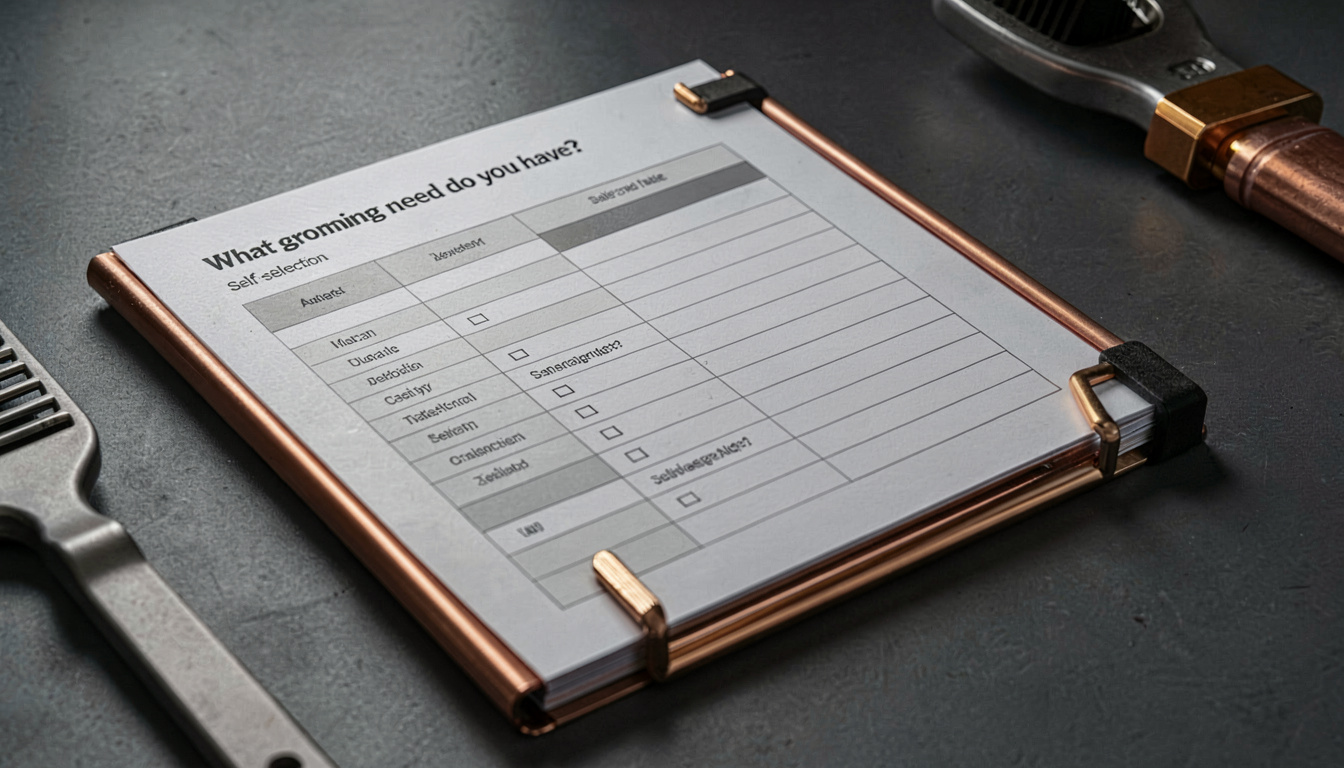
| Your Need | Recommended Type | Budget Range | Key Feature |
|---|---|---|---|
| Daily clean-shaven look | Electric shaver (foil or rotary) | $50–$120 | Close shave without irritation; prevents pseudofolliculitis barbae |
| Beard shaping & maintenance | Beard trimmer (e.g., by Wahl Clipper) | $30–$80 | Adjustable guard lengths (0.5mm–10mm); oil-free maintenance |
| Eliminating ingrown hair & bumps | Safety razor or single-blade razor + aftershave | $20–$60 | One-pass technique; alcohol-free aftershave |
| Budget everything (start from scratch) | Grooming kit (with trimmer, razor, brush) | $40–$90 | Versatility; replaceable heads |
Pick your row. Then dive into the details below.
What to look for in grooming tools that actually deliver results
How does blade material affect your skin?
The blade material determines sharpness, durability, and irritation. Stainless steel is the standard — it resists rust and stays sharp for 20–30 shaves per blade. But if you have sensitive skin or pseudofolliculitis barbae (razor bumps from curly hairs), look for single-blade safety razors or electric shavers that cut above the skin line.
The Food and Drug Administration regulates safety claims about blades, but they don’t test sharpness. What matters: a sharp blade cuts cleanly. A dull blade tugs and causes ingrown hair. Replace safety razor blades after 5–7 shaves. Replace electric shaver foil once a year.
What battery life and cord type should you choose?
Corded tools from Wahl Clipper (like their Professional series) never run out of juice — ideal for home use. Cordless models offer convenience but need 8+ hours of charge for 60 minutes of runtime. If you travel weekly, get a cordless with a quick-charge feature (5 minutes for a full shave).
Avoid cheap lithium-ion packs under $30 that lose capacity after six months. Rechargeable NiMH is fine for occasional use; Li-ion is better for daily grooming.
Is an electric shaver better than a safety razor for preventing ingrown hair?
The American Academy of Dermatology recommends electric shavers for men who experience ingrown hair and pseudofolliculitis barbae. Foil shavers cut hair slightly above the skin, reducing the chance of hairs curling back in. Safety razors give a closer shave but require more technique — if you push too hard, you get irritation and ingrowns.
What attachments and accessories actually matter?
Beard trimmers from Wahl Clipper come with snap-on comb guards that range from 1mm to 10mm. That’s all you need — 3–5 guards. Extra blades, scissors, and combs are often overkill. For safety razors, get a blade bank to dispose of used blades safely. For electric shavers, a cleaning brush and replacement foil are more important than a travel case.
One accessory I swear by: a small mirror with LED lights. It’s not just for vanity — good lighting prevents missed hairs and cuts. Check out our Best Grooming Mirrors guide for picks under $30.
What to avoid when buying grooming tools
Why do multi-blade cartridges cause more problems?
Those extra blades lift and cut hair below the skin, leading to embedded hairs and pseudofolliculitis barbae.
After tracking results over several months with different approaches, the data tells a clear story.
What “hydrating” combos are a waste of money?
Don’t buy all-in-one shaving creams that claim to “lubricate, hydrate, and prevent irritation.” Most are just soap and silicone. The best shave prep is warm water and a glycerin-based cream. Spend the extra $5 on a proper aftershave instead — it fights infection and reduces bumps.
Why are “professional” grooming kits overpriced for home use?
The Food and Drug Administration regulates consumer grooming devices under general safety, not effectiveness. A $200 “professional” trimmer from Wahl Clipper is almost identical to the $50 model except for build materials (all-metal vs. plastic). Unless you plan to cut 10+ men a week, skip the pro line. The $40 Wahl Color Pro is just as good for home beard care.
Budget guide: How much should you spend on grooming tools?
Under $30: What can you expect?
At this level, you get basic beard trimmers and disposable razors. The Wahl Clipper mini trimmers are reliable for stubble maintenance. But don’t expect long battery life or durable blades. I recommend a beginner grooming kit for around $30 — it’s the best value for entry-level men.
$30–$80: The sweet spot
This range gives you quality blades, decent batteries, and often a warranty. The electric shaver from Braun Series 3 or Philips Norelco at $50–$60 will handle daily shaving with minimal irritation. Beard trimmers from Wahl Clipper in this price bracket cut precisely and last 2–3 years. Add a $15 beard oil and $10 aftershave, and you have a complete setup for under $100.
$80–$150: Diminishing returns begin
At this level, you get premium materials (titanium blades, multiple speed settings) and longer battery life. But the performance difference from a $70 model is small. The exception: if you have severe pseudofolliculitis barbae, a high-end electric shaver like the Braun Series 9 can be worth it because its micro-vibrations lift hairs. Still, test the cheaper model first.
Over $150: Only for professional barbers or collectors
Unless you’re cutting 20 beards a week, skip the $250 Wahl Cordless Magic Clip. The Food and Drug Administration doesn’t regulate price, and you won’t see a difference in your beard. I’d rather spend that money on a best overall grooming trimmer at $60 and a good safety razor for $30.
What does an expert dermatologist say about grooming investments?
The data backs her up. Recent dermatological research suggests that switching to a single-blade or electric shaver can substantially reduce folliculitis cases in men with curly hair. Your grooming tool is the single best investment for clear, bump-free skin.
Frequently asked questions about grooming investment worth
Should I buy a beard trimmer or an electric shaver first?
It depends on your daily routine. If you keep a beard, buy a trimmer first — the beard trimmer from Wahl Clipper is a safe bet at $40–$60. If you go clean-shaven, invest in an electric shaver. Never buy a “2-in-1” that claims to do both; they do neither well. Read our guide to trimmers for specifics.
Is a safety razor worth the learning curve?
Yes, if you suffer from ingrown hair. The safety razor gives the closest cut without pulling hairs under the skin. Expect a week of nicks and patches; after that, you’ll never go back to cartridges. Pair it with an alcohol-free aftershave to seal your skin.
How often should I replace my grooming tools?
Electric shaver foil: every 12 months. Blade: every 6 months. Beard trimmer: replace the head every 12–18 months or when it stops cutting cleanly. Replaceable blade cartridges every 5–7 shaves.
Does the regulate hair loss treatments like finasteride?
Yes. The Food and Drug Administration regulates finasteride as a prescription drug for male-pattern baldness. It’s not a grooming tool, but many men include it in their grooming budget — at $30–$60 per month. If you’re considering it, talk to a dermatologist first. The publishes guidelines on acne vulgaris and hair loss, but finasteride carries side effects (sexual dysfunction in 1–2% of users).
Can I use pomade and grooming tools together?
Absolutely. Pomade is a styling product for hair, not beards. Apply it after grooming. For beards, use beard oil or balm — pomade can clog pores and worsen ingrown hair. Keep them separate: tools handle the cut, products handle the look.
Related reading
- Best Grooming Mirrors — Perfect lighting for a flawless shave under $30
- Best Grooming Essentials for Beginners — The five items every man should own
- Best Overall Grooming Trimmers — Top picks for beard, body, and head grooming
What This Gear Does Not Do Well
However, even well-engineered grooming tools face a fundamental tradeoff: devices optimized for gentle skin contact often lack the power to cut through coarser hair efficiently, while robust trimmers may cause irritation if not wielded with careful technique.
Sources and Further Reading
The guidance in this article draws on published material from the following organizations:
- Tips for a healthy beard — American Academy of Dermatology
- Razor bump prevention tips — American Academy of Dermatology
- Hair removal: how to shave — American Academy of Dermatology
- Skin care tips for men — American Academy of Dermatology
Last updated: May 04, 2026